
I keep two spare sarongs in the boot of my car. Not because guests forget to pack them, but because almost nobody knows they need one until we are already at the gate.
Temples are the part of Bali that visitors most want to see and know the least about. Not the clothing rules, which are simple once someone explains them, but the smaller things. Where you can stand. When to put the camera down. Which part of the courtyard is not for you.
I grew up with these temples. My family still brings offerings to ours. So here is what I tell guests on the drive, written down, so you can read it before you land instead of learning it from a sign at the entrance.
The Bali Temple Dress Code In One Paragraph
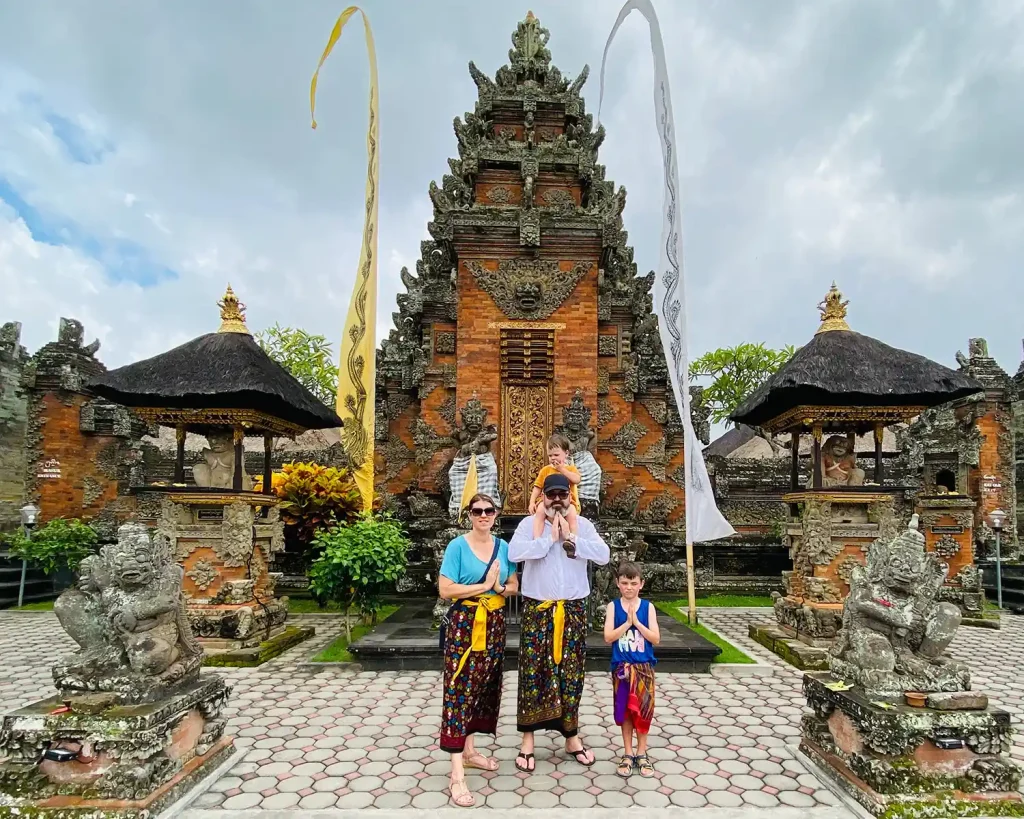
Cover your shoulders and your knees, wrap a sarong around your waist, and tie a sash over it. That is the whole rule. A t-shirt and a sarong will get you into any temple on this island.
The sarong is called a kamen, and the sash is a selendang. The sash matters more than people assume. In Balinese thinking it separates the upper body from the lower, the spiritual from the physical. Wearing a sarong without a sash is not quite dressed, the way a shirt without trousers is not quite dressed.
What To Wear Above The Waist
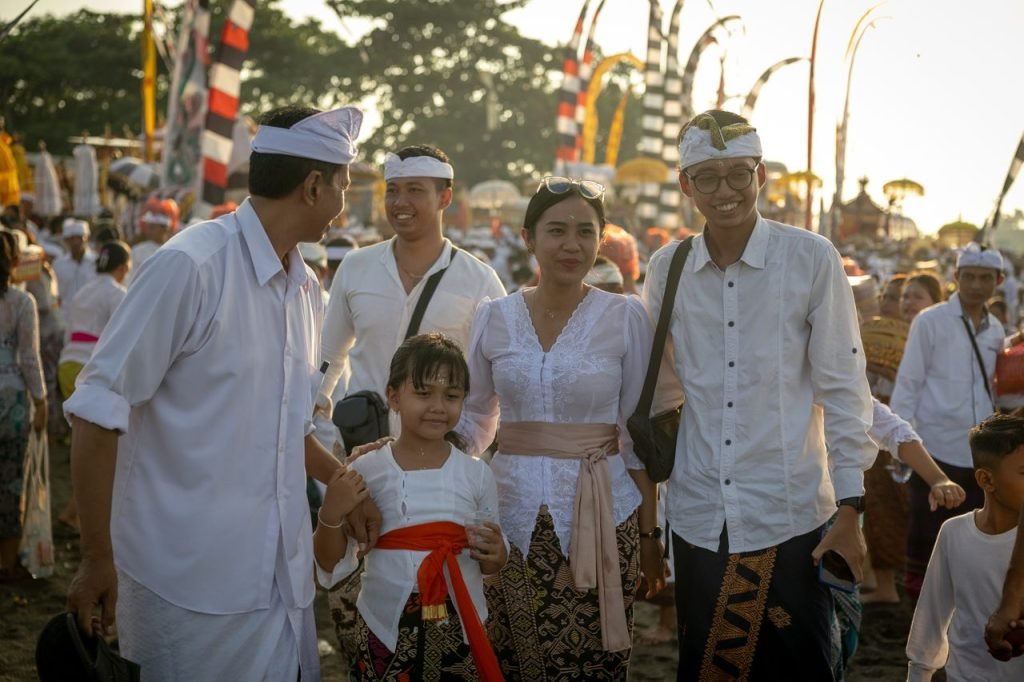
Shoulders and upper arms covered. That is the standard, and it applies to everyone regardless of gender.
What works: a t-shirt, a short sleeved shirt or blouse, a light linen shirt, or a scarf draped properly over both shoulders.
What gets you turned away: singlets and tank tops, crop tops, anything low cut, and beachwear or a swimsuit cover-up. Staff at the bigger temples check at the gate, and on busy days they check closely.
One practical note. Bali is hot, and a long sleeved shirt in the middle of the day is miserable. A loose cotton t-shirt covers you properly and stays comfortable. You do not need to dress heavily to dress respectfully.
Bring Your Own Sarong Or Borrow One?
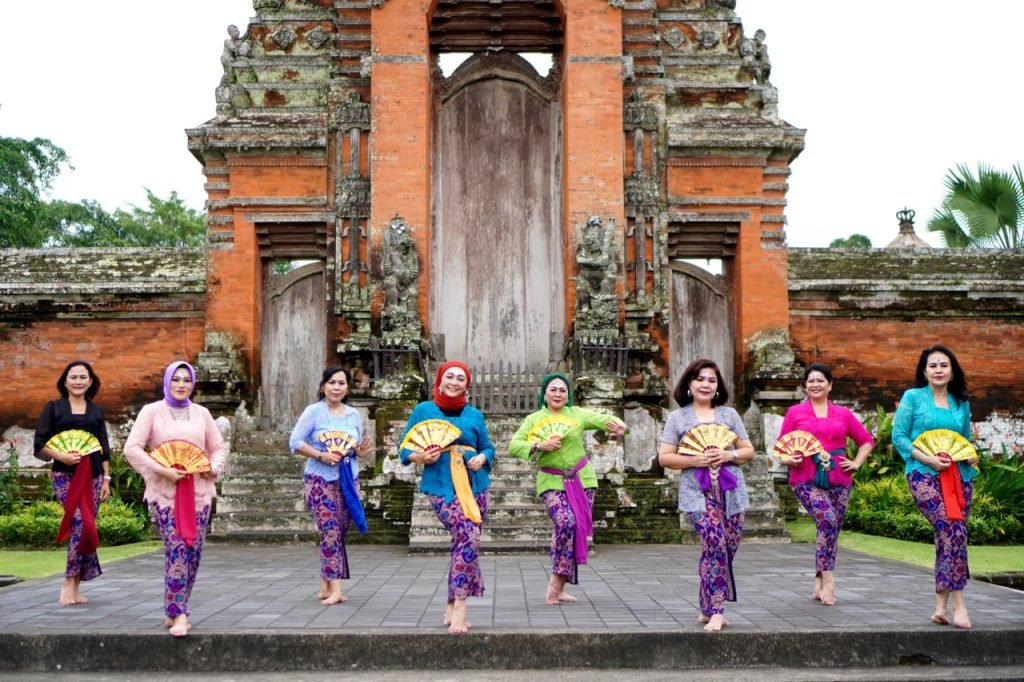
Most major temples hand out a sarong and sash at the entrance, usually included in the ticket price. Uluwatu, Tanah Lot, Tirta Empul and Besakih all do this.
Borrowing works if you are visiting one or two temples and do not want to carry anything. It costs nothing extra at most sites.
Bringing your own is better if you are visiting several temples in a few days. The queue at busy gates can take a while, the shared fabric has been worn by a lot of people that day, and smaller village temples often have none to lend.
You can buy a sarong at any market for very little. Ubud Art Market sells them in every colour. If you plan more than two temple visits, buy one on your first day and keep it in your bag.
Where You Can And Cannot Go
This is the part most guides skip, and it causes more awkward moments than clothing ever does.
A Balinese temple is divided into three courtyards. The outer courtyard, the middle courtyard, and the inner courtyard, called the Utamaning Mandala. The inner courtyard is where the shrines stand and where prayer happens.
Under the current provincial guidelines, visitors are not permitted into the sacred inner areas unless they are there to worship, in full Balinese ceremonial dress, and meet the temple’s ritual requirements. In practice this means you will see the temple from the outer areas, and that is normal. It is not a restriction aimed at foreigners. Balinese who are not there to pray stay out too.
You will usually see a rope, a low gate, or a sign. If you are unsure, ask. Nobody minds the question, and everybody minds the photo taken from the wrong side of the rope.
The Menstruation Rule
Women who are menstruating are not permitted to enter temple grounds. This is a long standing rule in Balinese Hinduism and it is stated explicitly in the current provincial guidelines, so it is worth knowing before you plan your day rather than finding out at a gate.
Nobody checks and nobody asks. It is treated as a matter of personal honesty. If it applies to you, the usual approach is to wait outside or visit somewhere else that day, and no explanation is expected.
Behaviour Inside The Temple
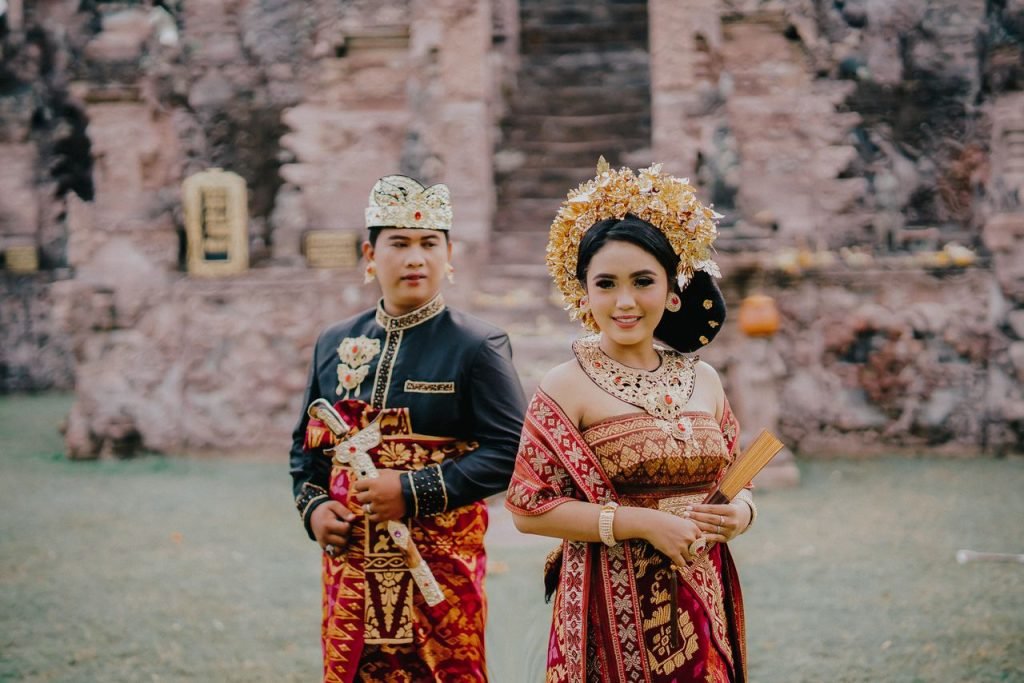
Clothing is the easy part. These are the things I actually find myself mentioning to guests.
- Do not walk in front of someone praying. If a person is kneeling, go behind them, never between them and the shrine.
- Stay lower than the priest. Do not climb onto a wall or platform to get a better angle if a ceremony is happening below you.
- Do not climb on shrines or sacred trees. This one carries real consequences now, including deportation in serious cases.
- Do not step on offerings. The small palm leaf trays on the ground are called canang sari. They are everywhere, including on pavements. Walk around them.
- Ask before photographing people. The buildings are fine. Worshippers are not a backdrop, and priests especially should be asked.
- Keep your voice down and your feet pointed away from shrines. Pointing the soles of your feet at something sacred is rude here, so avoid sitting with legs stretched out toward a shrine.
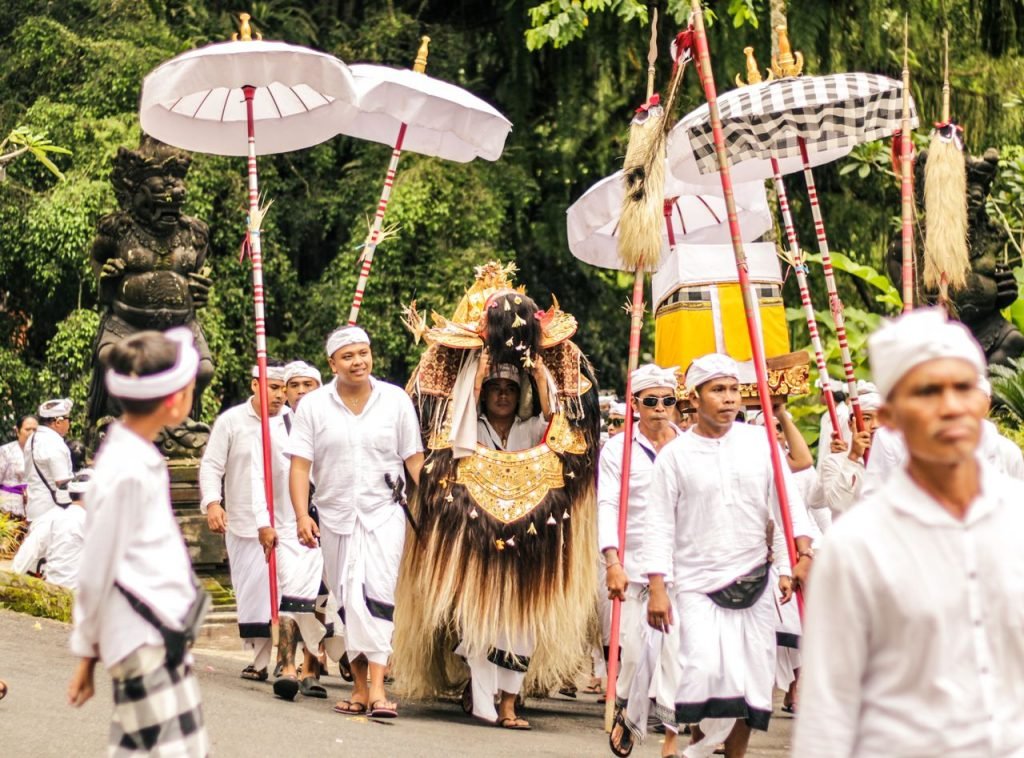
- If a ceremony starts, step aside. Ceremonies are not performances. Watching quietly from the edge is welcome. Standing in the middle with a phone is not.
Temple By Temple Notes
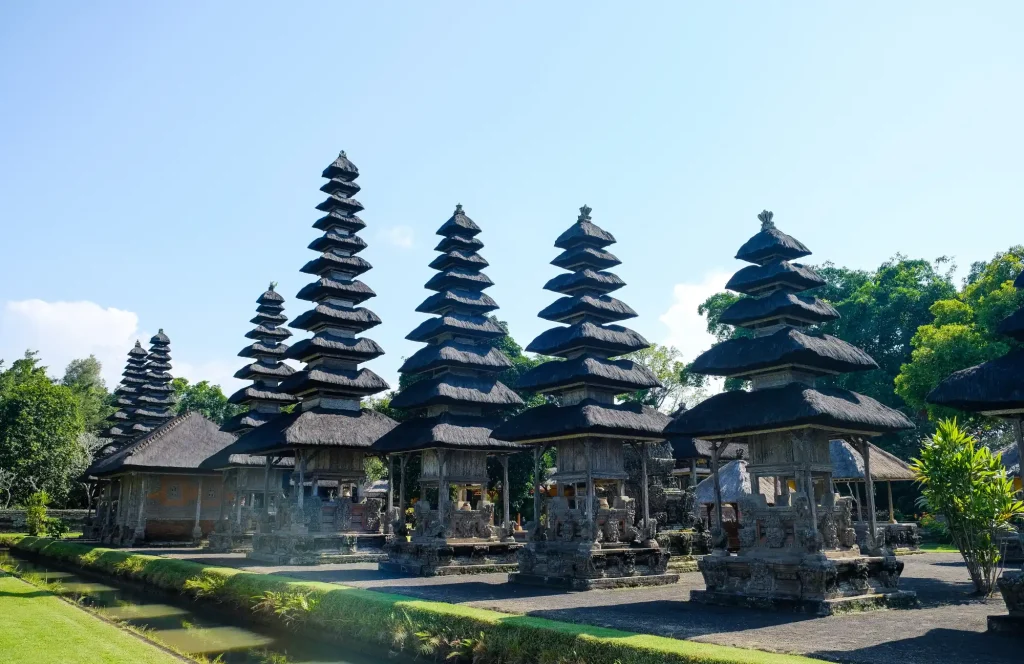
Uluwatu Temple. Sarong provided. The monkeys here are experienced thieves and go for sunglasses, phones and hats. Keep everything on your body or in a closed bag.
Tanah Lot. Sarong provided. You can only reach the base of the rock at low tide, and the temple itself is closed to visitors. The blessing at the spring is open to anyone, for a small donation.
Tirta Empul. The purification spring near Ubud. If you want to take part in the bathing ritual you will need a second sarong for the water and a dry one after, and there is an order to the fountains that matters. Do not just wade in. Ask, or go with someone who can explain it.
Besakih. The mother temple on the slopes of Mount Agung, and the largest on the island. Guide services here have a long reputation for pressure and unofficial fees. Agree on what you are paying before you start walking.
Ulun Danu Beratan. The lake temple at Bedugul. Cooler up there, so the shoulder covering is genuinely comfortable for once.
The Official Rules, Briefly
In March 2025 the Bali provincial government issued Circular Letter No. 7 of 2025, updating an earlier 2023 version. It sets out obligations for foreign visitors: respect sacred sites and symbols, dress modestly at temples and in public, behave politely, stay in licensed accommodation, use licensed guides at attractions, and pay the tourist levy.
The levy is IDR 150,000 per person, paid once per trip, through the official Love Bali portal at lovebali.baliprov.go.id. Pay it online before you fly and save the QR code.
One warning on that, because it involves people in my line of work. There are copycat websites charging two or three times the real amount, and there are drivers and guides who offer to handle the levy for you with a markup built in. I will not offer to do this for you, and you should say no if anyone else does. It takes about four minutes on the official site and the only legitimate address ends in baliprov.go.id.
Common Questions
Can I wear shorts to a temple in Bali?
Yes, as long as the sarong covers your knees on top of them. The sarong is what matters, not what is underneath. Shoulders still need covering.
Do men need to wear a sarong too?
Yes. The dress code applies to everyone. Men wear the sarong and sash the same way.
Do I have to take my shoes off?
Not in the outer courtyards of most temples. Some smaller or more sacred sites ask you to, and there will be a sign or someone will tell you. Follow what locals are doing.
Is there an entrance fee for Bali temples?
Most major temples charge a modest fee that usually includes the sarong. Village temples often ask only for a donation. Bring small notes.
Can I visit a temple during a ceremony?
Sometimes, and sometimes parts of the site close entirely. Ceremonies are not scheduled for visitors and dates move with the Balinese calendar. I check before we go, and if a temple is closed I will suggest somewhere else rather than have you drive there for nothing.
What happens if I break the rules?
For clothing, you will simply be asked to cover up or turned away at the gate. For serious disrespect, such as climbing on shrines or entering sacred areas, penalties now include fines, legal action and deportation. These have been enforced.
None Of This Is Meant To Make You Nervous
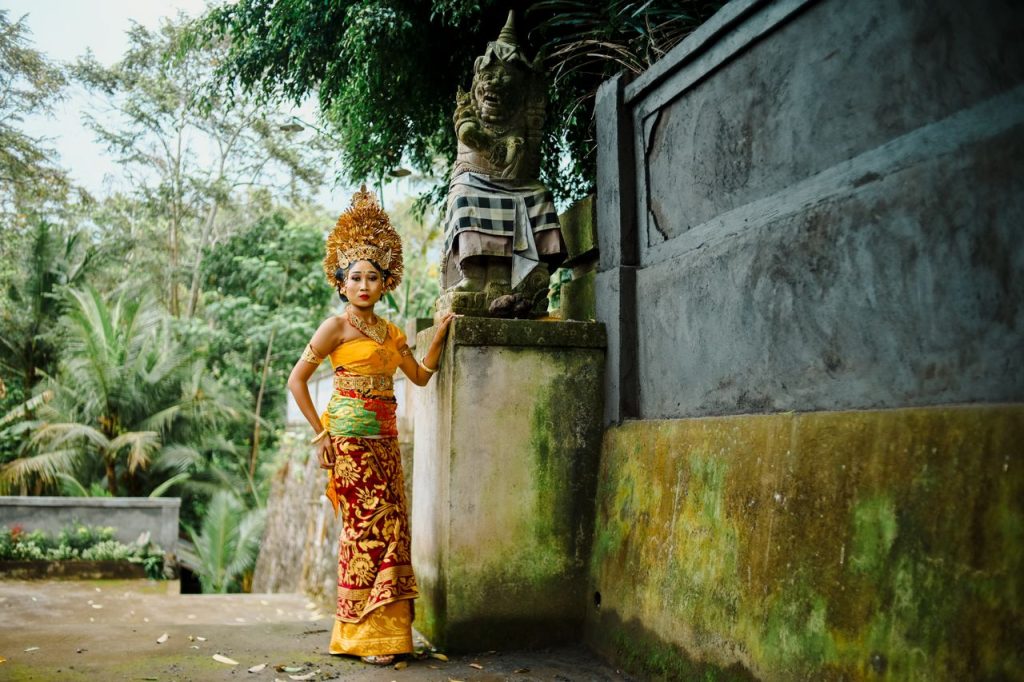
Balinese people are used to visitors and nobody expects you to know everything. In ten years of driving guests to temples I have never seen someone get in trouble for an honest mistake. What people notice is whether you are trying.
Cover up, keep your voice down, stay behind the rope, and ask when you are not sure. That is genuinely all of it.
If you are planning temple visits and want to know which ones suit your days, or when each one is quietest, send me a message. I will tell you what fits. You may also want to read how long it really takes to get around Bali before you decide how many to put in one day.